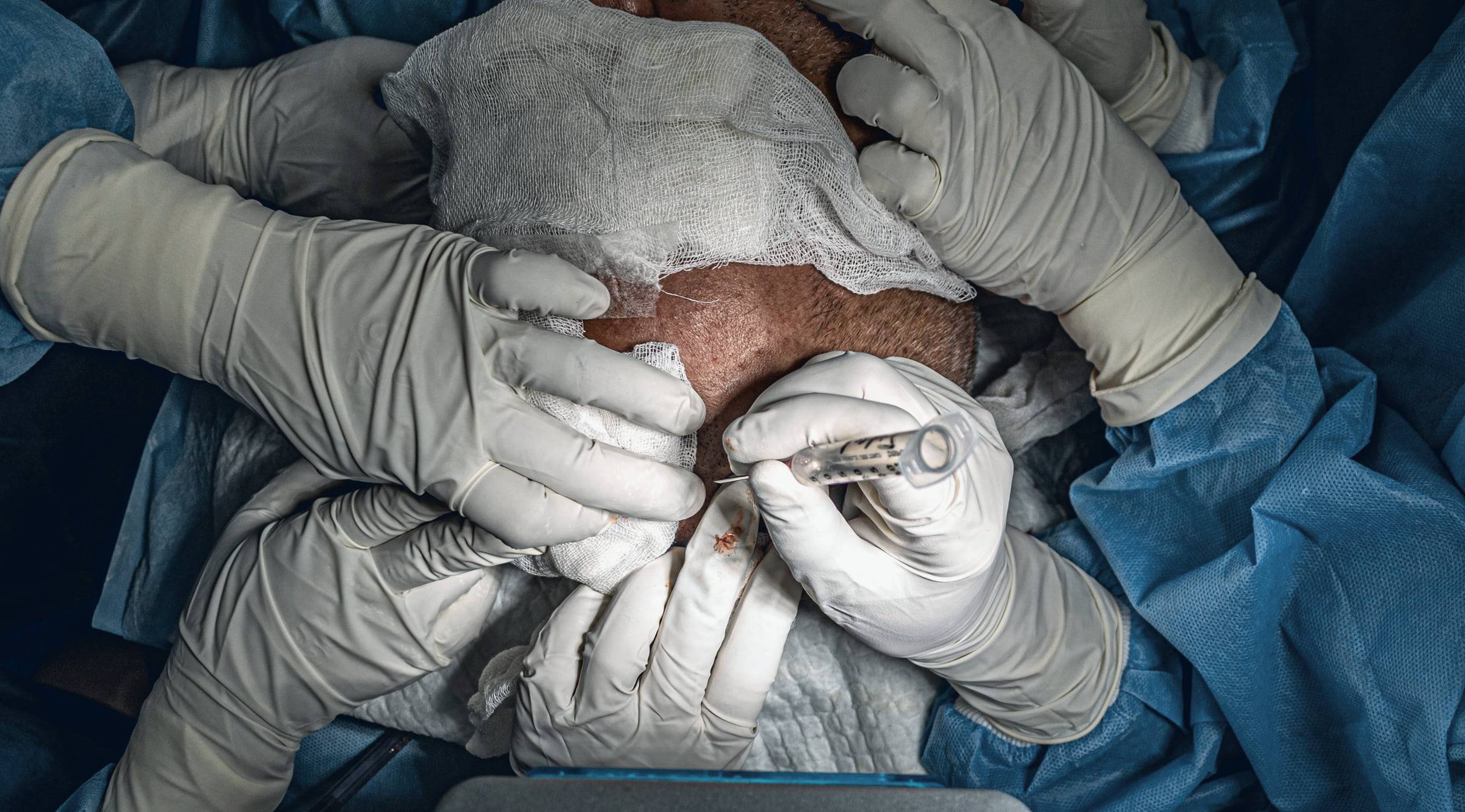
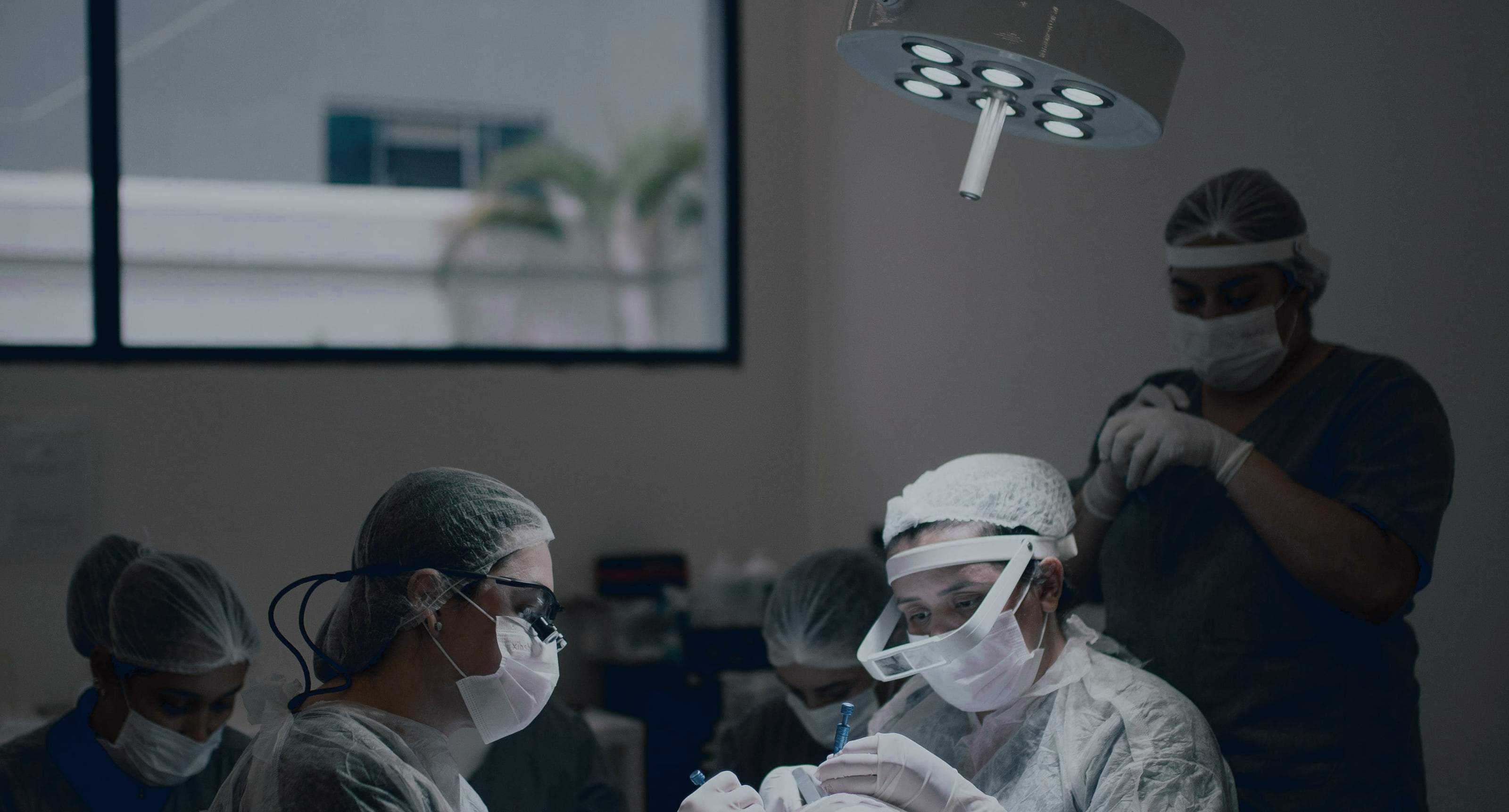
With DHI, a pen-like implanter makes the opening and places each graft in one move. Your surgeon places the grafts with the pen personally. We use it between the hair you still have, and often for hairlines; your surgeon decides case by case.
The same surgery in every package, sapphire FUE, DHI or both as your surgeon decides, with lunch on the day, your first wash and the medicines after surgery. Packages differ in hotel nights, PRP and aftercare.
Priced per package, not per graft: fixed, all taxes included, confirmed in writing before you travel.
Hair transplantation is surgery. Risks include infection, scarring, shock loss and grafts that grow poorly. Read about the risks
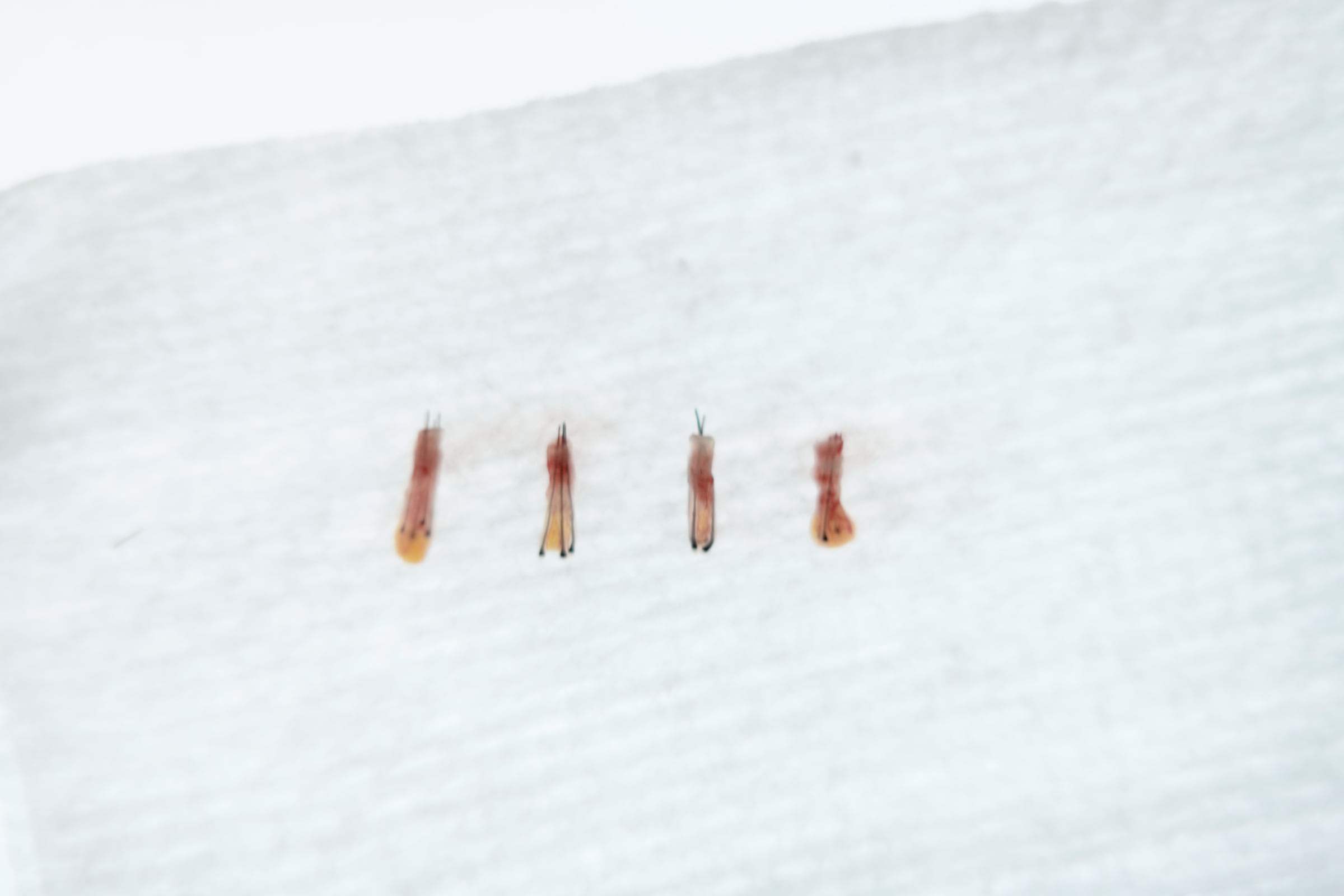
DHI stands for direct hair implantation. The grafts are taken out exactly as in FUE, one by one with a fine punch. The difference is how they go back in.
Instead of opening channels first, DHI uses an implanter: a pen-like tool with a hollow needle at its tip. We use the Choi implanter, named after the doctor who developed it in South Korea. The needle makes the opening and places the graft in the same move.
When we use DHI
At Dr. Grafts, DHI is the precise tool for adding grafts where you still have hair. Our surgeons use it for:
Diffuse or sparse thinning. Each graft goes in precisely between the hairs you already have.
The crown and the mid-scalp or front, when there is still hair in the area.
Unshaven procedures, when your surgeon agrees to one. DHI can work between long hairs, while sapphire FUE is only rarely done unshaven. Shaving is still usually the safer choice, as explained below.
Women, whose hair loss is usually thinning rather than baldness. Our page on hair transplant for women explains more.
Second procedures, when your own hair around an earlier transplant has fallen out, often because medication was stopped.
DHI is also used for hairlines in many cases. For some hairlines our surgeons prefer sapphire FUE, where the fine blade can allow closer packing at the front; they decide case by case. Sapphire FUE is also the usual choice over large bald areas, because there is no existing hair to work around.
How DHI works
Loading the implanters
The technician team loads each graft into the needle of an implanter, under your surgeon’s direction. Needles come in different widths, so each graft goes into one that fits its size. Several implanters are used in turn, so one can be loaded while another is in use.
Implanting
Your surgeon implants the grafts personally. The needle goes in at the angle, direction and depth they plan, and a plunger leaves the graft in place. Because each graft is set on its own, the angle can be adjusted graft by graft. That matters most between existing hairs, where each new hair has to match the direction of the hairs around it.
Who holds the pen. Your surgeon places the grafts with the DHI pen personally. The technician team loads the implanters.
Depth matters as much as angle. Each graft should sit level with the skin around it, neither sunk below the surface nor standing proud of it.
DHI is slower per graft than placing grafts into ready-made channels. That is a fair trade where precision matters, among hair you want to keep. Over a large bald area, sapphire FUE works more quickly and evenly.
Unshaven and partly shaven DHI
Because DHI can place grafts between existing hairs, it is the technique used when a procedure is done unshaven. That is possible, but it costs more, and our surgeons usually advise against it, especially for diffuse thinning. The final call is your surgeon’s. These are the limits:
The donor area still needs trimming. Usually a band at the back is clipped short and hidden under the longer hair above it. Extraction without any trimming is possible only for very small plans and takes much longer.
It is slower. Working between long hairs takes more time per graft. A receding hairline done unshaven usually takes a day, and larger areas can take 2.
Your surgeon sees less. Long hair hides part of the scalp. This makes even spacing harder and raises the risk of harming existing hairs.
It raises the risk with diffuse thinning. Existing hair falls onto the fresh grafts and sticks to the crusts, and its movement can pull grafts out. This raises the risk of infection and complications, so shaving is usually the safer choice.
It is not invisible. Existing hair near the grafts may shed for a few months (shock loss), and early scabs and redness are only partly hidden.
Send photos for your free plan and your surgeon will tell you whether an unshaven procedure is possible for your plan, and whether they would advise it. Your coordinator gives you the price.
DHI or sapphire FUE?
Compared
DHI
Sapphire FUE
How grafts go in
The implanter opens and places in one move
All channels are opened first, then grafts are placed
Where we use it
Thinning areas with existing hair: crown, mid-scalp, front; many hairlines
Bald or nearly bald areas; some hairlines
Hairline
Often, case by case
Sometimes, where closer packing at the front helps
Speed
Slower per graft
Quicker over large areas
Shaving
Full or partial; unshaven is possible but usually not advised
Usually a full shave
Price with us
The same
The same
Neither technique has been shown to grow more hair in general. Studies comparing them directly are few and small. With DHI, grafts can go in soon after they come out, but good evidence that this improves growth is lacking. Planning, gentle graft handling and the team’s skill matter more than the name of the technique, so our surgeons choose by how much hair you have in each area.
The same price either way. Your surgeon chooses the technique for each area; you don’t need to.
Some patients have both in one procedure, for example sapphire FUE where the scalp is bald and DHI where hair is thinning. This is called a hybrid. It is not used for everyone: your surgeon decides case by case, and you do not need to choose it. Our hair transplant page explains how a plan is put together.
Results and recovery
Recovery after DHI is much the same as after FUE. Scabs usually come away with gentle washing by day 10–14, and redness fades over the same time. The donor area heals within about 2 weeks. With an unshaven procedure, longer hair hides much of this from the start.
Most transplanted hairs shed between weeks 2 and 8, and new growth starts around month 3–4. Most of the result shows at about 12 months, and the crown can take up to 18 months. Because the new hairs grow in among your existing hair, the change tends to look gradual rather than sudden. Our recovery timeline covers each stage.
Risks and side effects
DHI has the general risks of any hair transplant: swelling, temporary numbness, spots (folliculitis), shock loss of existing hair, infection (rare) and grafts that grow poorly. Grafts set too deep can leave small dents, and grafts set too high can leave small bumps, which is why depth control matters. In unshaven work, existing hairs are at more risk because the scalp is harder to see, and with diffuse thinning the risk of infection and complications is higher.
On surgery day you have blood tests. Then your surgeon examines your scalp and agrees with you which areas to treat.
2
Trim and numb
Depending on your plan, the treated area is shaved, partly trimmed or left long. Local anaesthetic, with adrenaline to reduce bleeding, numbs the donor and treated areas.
3
Take out grafts
Grafts are taken out one by one with a fine punch, as in FUE. Your surgeon takes out grafts personally and directs the technician team.
4
Load the implanters
After lunch, which is included, the technician team loads each graft into an implanter needle that matches its size.
5
Implant
Your surgeon places each graft personally with the DHI pen, between your existing hairs in one move, at the angle, direction and depth they plan, and checks the work at every stage. Then you go back to your hotel.
Who does what
Your surgeon leadsyour whole procedure
Ask any clinic you are considering who will actually do each step of your procedure. Here is what doctor-led means at Dr. Grafts.
Our lead surgeon plans every procedure, with both surgeons on complex cases. On the day, your surgeon draws your hairline with you at the mirrorDonor hair is limited, so the plan protects it for later
Taking out the grafts
Your surgeon takes out grafts personally, with an experienced technician team working under their directionCareful extraction protects the donor area
Opening the channels, or the DHI pen
Your surgeon, personally: opens the channels in sapphire FUE, or places the grafts with the DHI pen in DHIThe most important steps: they set the angle, direction and density of your new hair
Patients per day
Usually two to three, with our two surgeonsYour surgeon leads every step and checks the work at each one, though not beside you every minute
Where
Surgery takes place in the operating rooms of licensed hospitals in Istanbul, Turkey
Aftercare and follow-up
Your coordinator and your surgeon, for 12 monthsAnything unusual can be picked up early
Questions
Questions aboutDHI hair transplant
Can DHI be used for my hairline?
Yes, and it often is. Our surgeons choose between DHI and sapphire FUE for the hairline case by case: DHI places each graft precisely in one move, while a sapphire blade can allow closer packing at the front in some cases. Your surgeon decides from your photos and on the day. If you need both, they can be combined in one procedure.
Can DHI be done without shaving?
It can, but our surgeons usually advise against it. Unshaven work costs more and is slower: a receding hairline usually takes a day, and larger areas can take 2. With diffuse thinning, long hair falls onto the fresh grafts, sticks to the crusts and can pull grafts out, which raises the risk of infection and complications. Shaving is usually the safer choice for your result, and the final call is your surgeon’s.
How long should my hair be for unshaven DHI?
If your surgeon agrees to an unshaven procedure, long enough to cover a trimmed band at the back and the treated area while it heals, usually at least a few centimetres. Send recent photos with your hair at its usual length, and tell us how you normally style it.
Can DHI be used on the crown?
Yes, when there is still hair there. DHI works well in the crown and the mid-scalp or front among existing hair. If your crown is bald or nearly bald, sapphire FUE is the usual choice.
Is DHI suitable for adding density to thinning hair?
Yes, that is what we mainly use it for. Each graft goes in at a set angle between existing hairs, which suits areas that are thinning rather than bald. Existing hair nearby may still shed for a few months afterwards, and most of it usually grows back.
Can I have DHI after an earlier transplant?
Often, yes. If your own hair around an earlier transplant has fallen out, often because medication was stopped, DHI lets grafts be added between the hair that is left. How much is possible depends on your donor area.
Does DHI cost more than sapphire FUE?
Not with us. Both techniques cost the same, and your surgeon chooses the technique for each area. Our packages differ in what comes with the surgery, such as hotel nights, PRP sessions and aftercare.
Read next
TechniquesFUE vs DHI: how the two techniques really differFUE and DHI take grafts out the same way and differ in how they go back in: when our surgeons use each, how they choose at the hairline, what hybrid means.
PlanningHow many grafts do I need for a hair transplant?Typical graft numbers for each Norwood stage, what changes yours, from donor strength to hair thickness and curl, and why one session has a safe limit.
RecoveryHair transplant recovery week by week: what to expectRecovery after a hair transplant from day 1 to month 18: swelling, crusts, first washes, shedding and growth, and when people return to work, gym and sun.
Send four photos. Our lead surgeon replies with your plan, graft estimate and full price, usually within 24 hours. Free, and you are not committing to anything.