If an earlier transplant looks pluggy, sits too low or left a visible scar, it can often be improved. How much depends mainly on the donor hair you have left, so we start with an honest assessment.
Repair, also called revision, is surgery to improve the result of an earlier transplant. Some problems come from older methods, such as the large grafts, or plugs, used decades ago. Others come from poor planning or rushed work: a hairline drawn too low, grafts set at the wrong angle, or too many grafts taken from one part of the donor area.
It starts with your donor area. How much can be improved depends mainly on the donor hair you have left, so your surgeon assesses that first.
Repair is usually harder than a first transplant. Your surgeon has to work around old grafts and scars, often with less donor hair. Repair uses the same tools as a first transplant, but the planning is more cautious, and we tell you plainly what can and cannot be improved.
Common problems and how they are treated
Problem
What you may notice
Usual options
Pluggy or clumped grafts
Tufts of hair, a doll’s-hair look at the front
Remove or split the grafts; add single-hair grafts in front to soften the edge
Wrong angle or direction
Hair sticks up or forward and will not lie flat
Remove and re-place grafts; add correctly angled grafts around them
Hairline too low, straight or wide
A line that looks unnatural now, or will with age
Remove grafts from the front edge, often over more than one session
Over-harvested donor area
Thin, patchy back and sides
Graft into thin patches from remaining hair or beard; camouflage
Strip (FUT) scar
A visible line across the back of the head
Grafts into the scar; surgery to narrow a wide scar; camouflage
Thin or patchy growth
Low density or gaps after 12 months
Add grafts if donor hair allows; check for other causes of hair loss
Your own hair lost around an earlier transplant
The transplanted area looks isolated as the hair around it thins, often after medication was stopped
A second procedure, usually with DHI between the hair that is left
How repair works
Removing and moving grafts
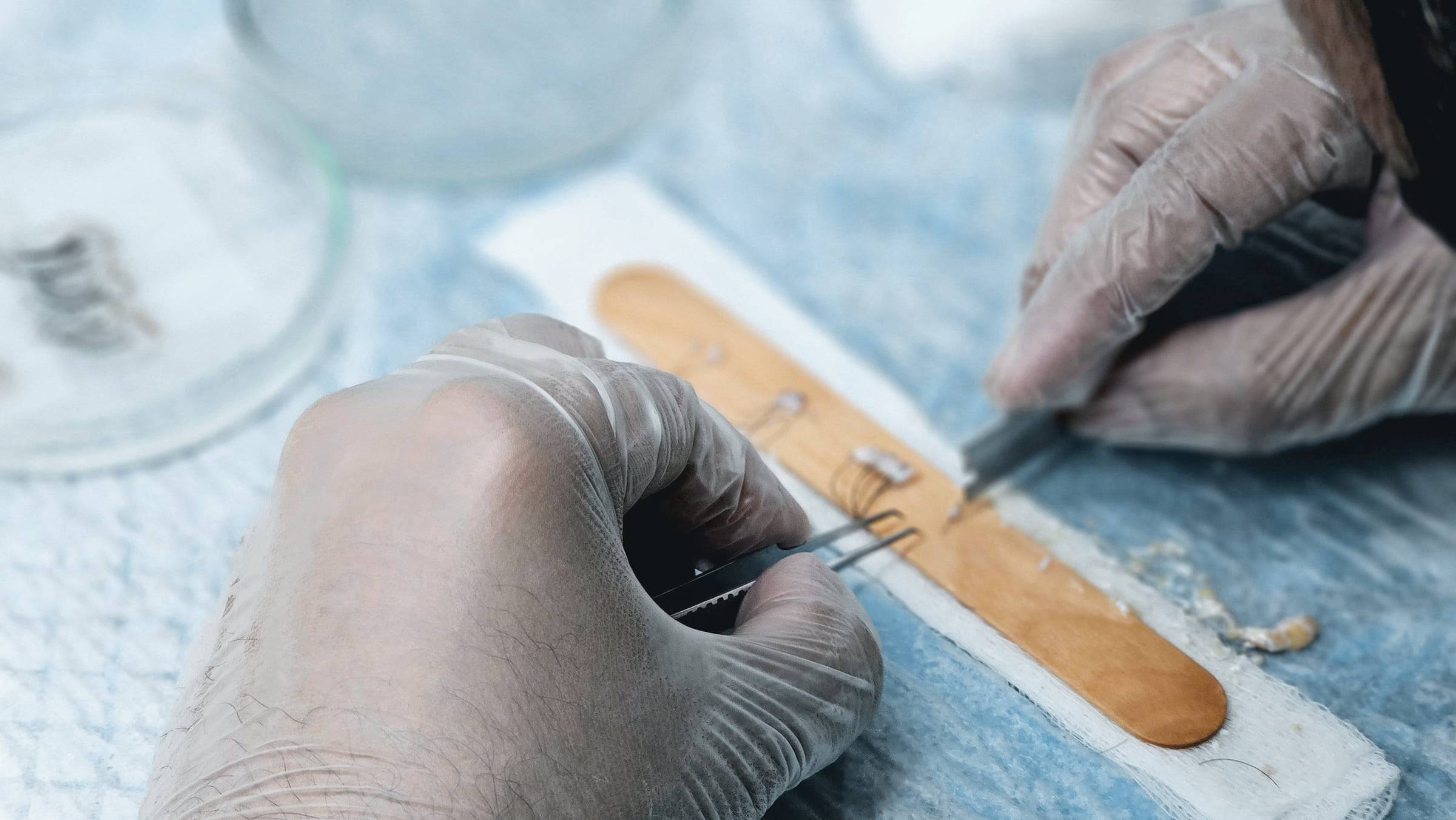
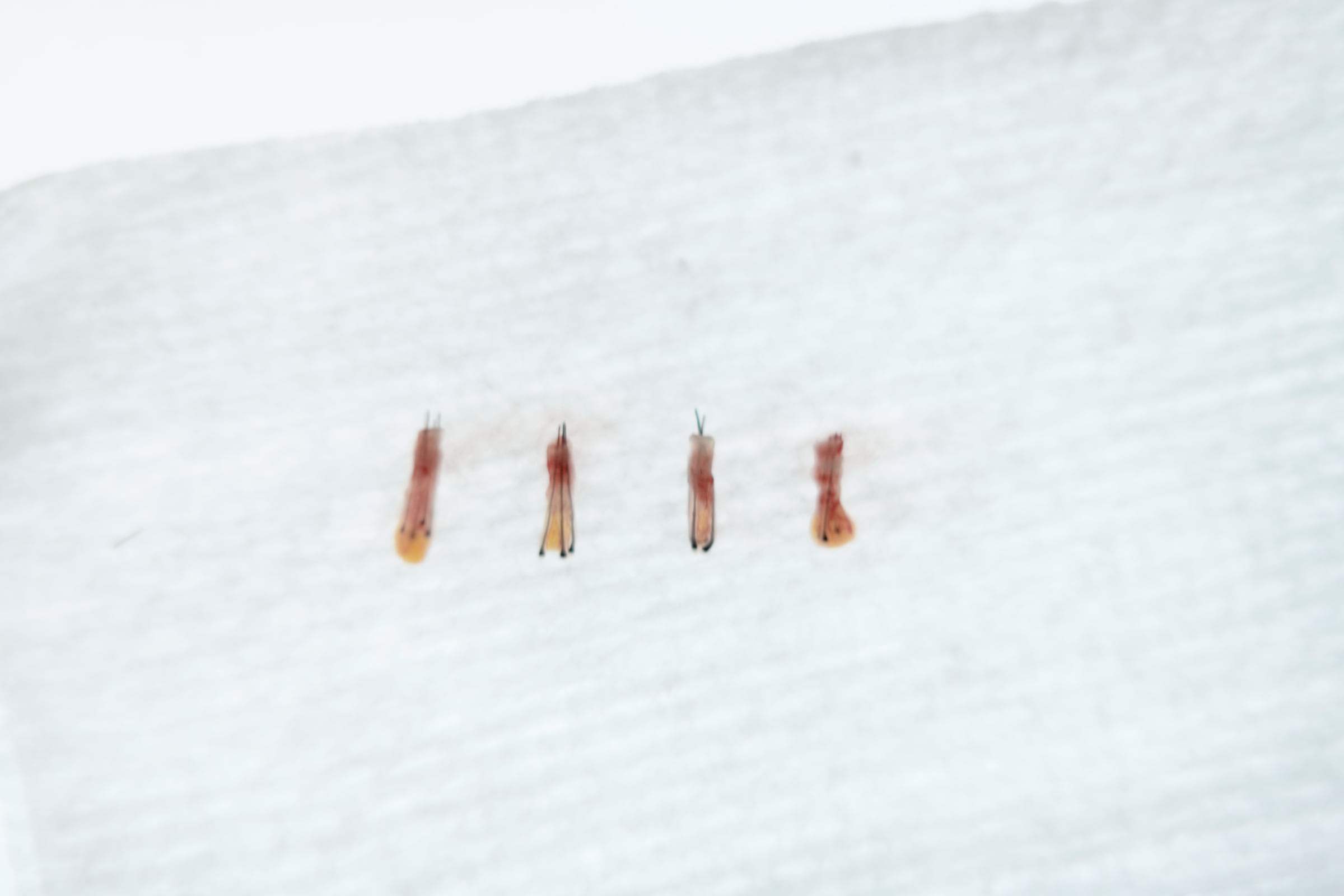
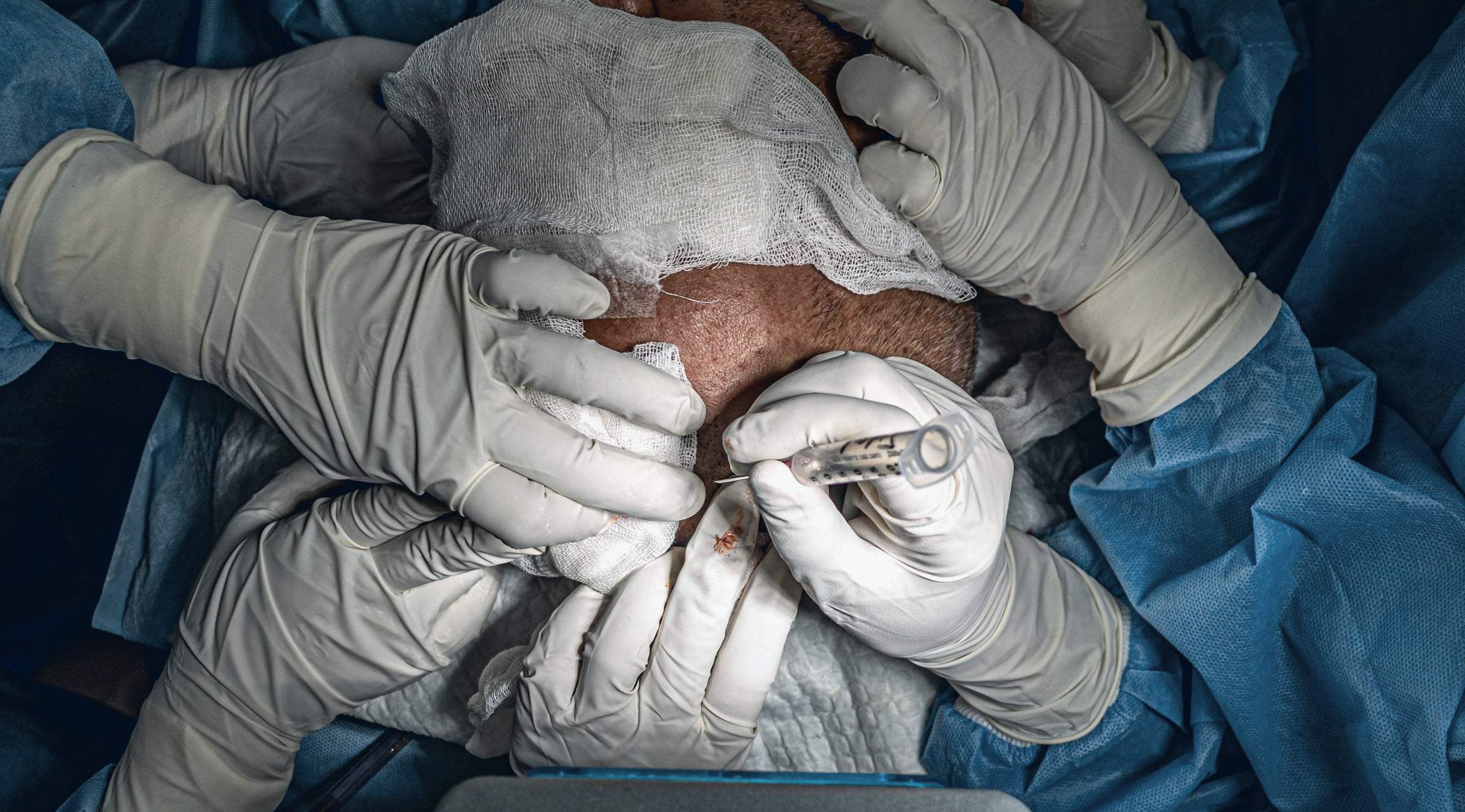
Grafts in the wrong place can be taken out with a fine punch, as in FUE. Large old grafts can be divided under magnification into single-hair grafts and placed where they look natural. Not every moved graft survives, and each removal leaves a tiny mark that heals as a pale dot.
Adding single-hair grafts
Often the simplest repair is to soften a harsh edge rather than remove it. Single-hair grafts placed in front of and between old grafts can make a pluggy hairline look much more natural. This uses fewer grafts than a full redo, which matters when donor hair is limited.
Filling in around an earlier transplant
Sometimes the transplant itself is fine, but your own hair around it has fallen out, often because medication was stopped. The transplanted area can then look isolated. Our surgeons usually use DHI for this second procedure, because the implanter places each graft precisely between the hairs that are left. How much can be done depends on your donor area.
Scar repair
Grafts can be placed into a strip scar to break up the line. Scar tissue has a weaker blood supply, so grafts grow less reliably there and a second session is common. A very wide scar may first need a small operation to narrow it. Whether that is done with us or by a specialist we refer you to depends on the scar; your surgeon tells you in the plan.
Scalp micropigmentation
Scalp micropigmentation (SMP) is a cosmetic tattoo of tiny dots that look like closely shaved hair. It grows no hair, but it can reduce the contrast between scalp and hair over scars or thin areas. It fades over the years and needs top-ups, and it is an add-on to surgery, not a replacement. Ask your coordinator on WhatsApp whether it suits your case.
What repair can and cannot do
The donor area sets the limits. Most people have 4,000–6,000 grafts to use in a lifetime, and an earlier transplant may already have used many of them. If your donor area has been over-harvested, taking more can make the back look thinner still. In that case we may suggest beard hair as an extra source, or advise against more surgery.
Repair also takes time. We usually wait at least 12 months after your last surgery, so that the earlier result has fully grown in. Many repairs need two stages, each judged after its own growth period, so the whole process can take 2 years or more.
The aim is a clear improvement, not erasing the past. Old scars and removal marks rarely disappear completely. Your surgeon may also discuss medication such as finasteride or minoxidil, to protect the hair you still have.
Results and recovery
Recovery is similar to a first transplant. Removal sites and new grafts form small scabs that usually come away with gentle washing by day 10–14, and redness fades over the following weeks. Moved and new grafts follow the usual pattern: shedding in the first weeks, new hair from month 3–4 and most of the result at 12 months. Grafts in scar tissue can be slower and less predictable. Our aftercare guide explains how to look after both areas.
Risks and side effects
Repair carries the general risks of any transplant: swelling, temporary numbness, spots (folliculitis), shock loss of existing hair, infection (rare) and grafts that grow poorly. It also has its own. Grafts placed in scars, or moved from one place to another, survive less reliably. Removals leave small marks, and the improvement may be smaller than you hoped. We go through each of these with you before you decide.
What it costs
Repairs are priced individually, because no two are alike. After a free plan review of your photos, your surgeon sends a written plan with the likely number of sessions and a custom quote. Costs are discussed with your coordinator on WhatsApp. Packages for first transplants are on our prices page.
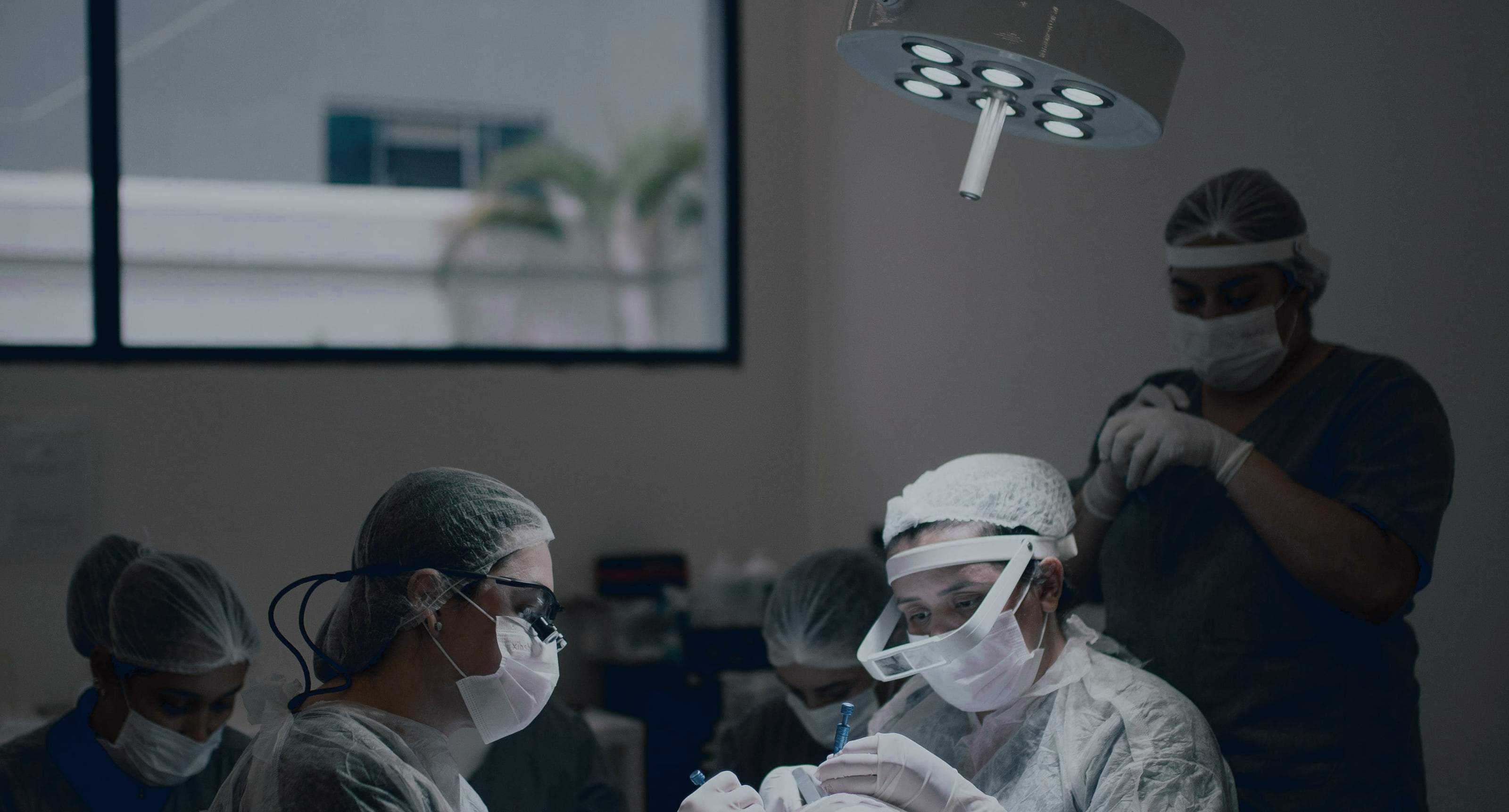
Our lead surgeon plans every procedure, with both surgeons on complex cases. On the day, your surgeon draws your hairline with you at the mirrorDonor hair is limited, so the plan protects it for later
Taking out the grafts
Your surgeon takes out grafts personally, with an experienced technician team working under their directionCareful extraction protects the donor area
Opening the channels, or the DHI pen
Your surgeon, personally: opens the channels in sapphire FUE, or places the grafts with the DHI pen in DHIThe most important steps: they set the angle, direction and density of your new hair
Patients per day
Usually two to three, with our two surgeonsYour surgeon leads every step and checks the work at each one, though not beside you every minute
Where
Surgery takes place in the operating rooms of licensed hospitals in Istanbul, Turkey
Aftercare and follow-up
Your coordinator and your surgeon, for 12 monthsAnything unusual can be picked up early
Questions
Questions aboutHair transplant repair
Do you repair transplants done at other clinics?
Yes. Bring any records you have, such as the date, the technique and the number of grafts. We focus on your scalp as it is today, not on who did the earlier surgery.
How soon after my last transplant can I have a repair?
Usually not before 12 months, or 18 months if the crown was treated. Until then, hair is still growing in and the skin is still settling, so it is too early to judge what needs fixing. If something worries you sooner, send photos and we will take a look.
Can a hairline that is too low be raised?
Often partly. Grafts at the front edge can be taken out and reused further back, usually over one or two sessions. The removal sites heal as tiny pale dots, which are faint but can be seen up close.
What if I have hardly any donor hair left?
Then the options are limited, and we will say so. Beard hair can sometimes add grafts, and scalp micropigmentation or a different hairstyle can make thin areas less noticeable. Sometimes the honest advice is no more surgery.
Will my repair look completely natural?
The aim is a result that looks natural at a normal distance and in normal light. Old scars, removal marks and limited donor hair can set a ceiling, so some repairs only partly improve things. Your written plan says what we expect in your case.
Read next
SafetyHair transplant risks and side effects explainedAn honest list of hair transplant risks and side effects, how a careful clinic lowers them, what is normal after surgery and when to call your clinic.
PlanningAm I a good candidate for a hair transplant?Who is likely to be a good candidate for a hair transplant: stable hair loss, a strong donor area and realistic goals, and when it is wiser to wait.
PlanningHow many grafts do I need for a hair transplant?Typical graft numbers for each Norwood stage, what changes yours, from donor strength to hair thickness and curl, and why one session has a safe limit.
Send four photos. Our lead surgeon replies with your plan, graft estimate and full price, usually within 24 hours. Free, and you are not committing to anything.